
The NSSN often views smart sensing through a technological lens, but this month innovative research from UNSW focused on human sensory experience caught our attention.
Crowded footpaths, booming traffic noise and loud underpasses are part of everyday city life.
But for neurodivergent people, many everyday urban environments can demand constant cognitive and sensory effort.
This is because people with conditions such as autism or ADHD are more likely to experience heightened sensitivity to noise, heat, glare and crowds.
Dr Fatemeh Aminpour. Credit: Supplied
Examples of areas in Sydney CBD which could prove challenging to neurodivergent people include the congested Devonshire Street tunnel, cluttered parts of Broadway, and the South Dowling Street footpath which is shared with cyclists.
With an estimated 15–20 per cent of the population being neurodivergent, this becomes a significant equity issue and increases the likelihood that people will stay away from public spaces in the city.
Their experience is something inclusive design researcher Dr Fatemeh Aminpour has spent years investigating.
“Busy footpaths, loud underpasses, visual clutter, glare, crowded transport stations and complex interchanges can make routine trips mentally and emotionally exhausting for neurodivergent people,” the Research Fellow at UNSW’s City Futures Research Centre says. “But these aspects of urban experience are rarely measured or considered in planning decisions.”
“This gap in neuroinclusive design was clear in my recent City of Sydney–funded study, where neurodivergent participants consistently described how these conditions made it harder to use public spaces and feel at ease. This project is an important starting point, and the insights generated can help inform future planning and public space improvements.”
The study involved interviews with neurodivergent people about various design aspects in the City of Sydney, including street furniture, lighting, footpaths, noise and crowd management, wayfinding and signage.
Participants identified many challenges, including poor signage, crowding and flickering lights.
But they emphasised it was the cumulative effect over time, rather than any single issue in isolation, which led to fatigue, reduced confidence and the avoidance of certain places.

Pitt Street Mall in Sydney’s CBD is a busy but pedestrianised street with frequent seating and opportunities to pause and rest. Credit: Supplied
“When environments are hard to read and offer few opportunities to pause or recover, everyday participation for neurodivergent people becomes significantly more difficult,” Dr Aminpour says.
A sensory map solution
Her recommendation? A crowdsourced sensory map of Sydney which captures collective patterns of lived experience and supports anticipatory decision-making.
The inclusive design researcher says the map could highlight challenging conditions such as noise hotspots, overcrowded footpaths or confusing intersections.
“A sensory map could highlight where navigation consistently breaks down, where signage is insufficient, where clutter creates pinch points or disrupts movement, where lighting is inconsistent, flickering or uncomfortable, where seating is inadequate or poorly located, and where poor surface conditions are causing people to trip and need fixing,” she says.
It could also illustrate features that support comfort, such as quieter areas, sheltered spaces, cooler microclimates, or environments that feel clear, calm and easy to navigate.
“Rather than arriving somewhere and realising too late that a space is too noisy, too chaotic or socially ambiguous, people could make informed choices in advance by deciding when to go, where to enter, where to wait, whether to choose an alternative route, or whether a different place might feel more manageable that day.”
The map would capture how the experience for neurodivergent people changes between morning and evening.
“You might think of it as similar to Google’s “busy times” feature, but richer and more nuanced, and based on lived experience.”
Where sensor measurements add value
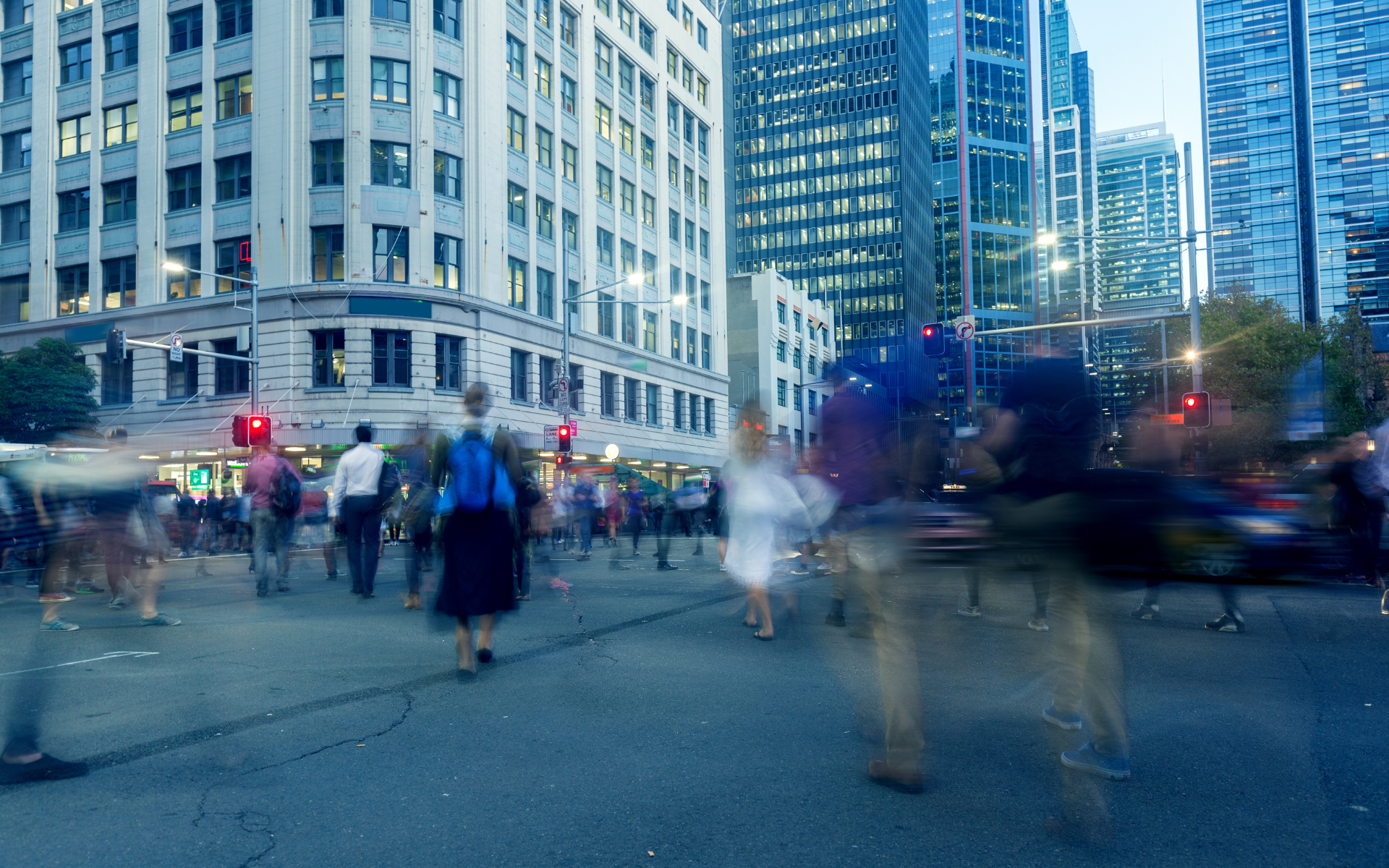
Dr Aminpour says busy footpaths can feel acceptable or even enjoyable to neurodivergent people when movement is predictable and well-managed. Credit: AdobeStock
Sensors could also play a valuable role by measuring physical conditions such as noise, crowding and light, while crowdsourced data reveals how those conditions actually feel to people.
“When the two align, it strengthens confidence in the patterns being observed, and when they don’t, it often highlights important design insights,” she says, citing a research example which showed that crowd density alone doesn’t determine whether a space feels overwhelming.
“Busy footpaths can feel acceptable or even enjoyable when movement is predictable and well-managed. Similarly, coordinated sound such as music can feel pleasant, while multiple competing sound sources often become overwhelming.”
Dr Aminpour, who has a background in architecture, is keen for a pilot in a real-world setting, such as a precinct slated for renewal, a transport interchange, or an events-heavy civic space.
“I’d like to see an agency or council explicitly recognise cognitive and sensory data as legitimate planning evidence, for example, by incorporating it into a place audit, masterplan, or upgrade program,” she says.
“Even a small pilot where experience is treated as something to measure, analyse and respond to would represent an important cultural shift in how we approach city-making.”
Dr Aminpour says researchers can now develop tools that take lived experience seriously and use it to guide more inclusive decisions.
“This is an important issue because Sydney is changing rapidly, with higher density, more frequent events, more mixed-use precincts and more complex transport environments,” she says.
“Without ways of understanding how these environments are actually experienced by diverse users, we risk unintentionally creating places that are harder to navigate and less supportive for many people.”