
Meet the Researcher: Dr Jessie Posar
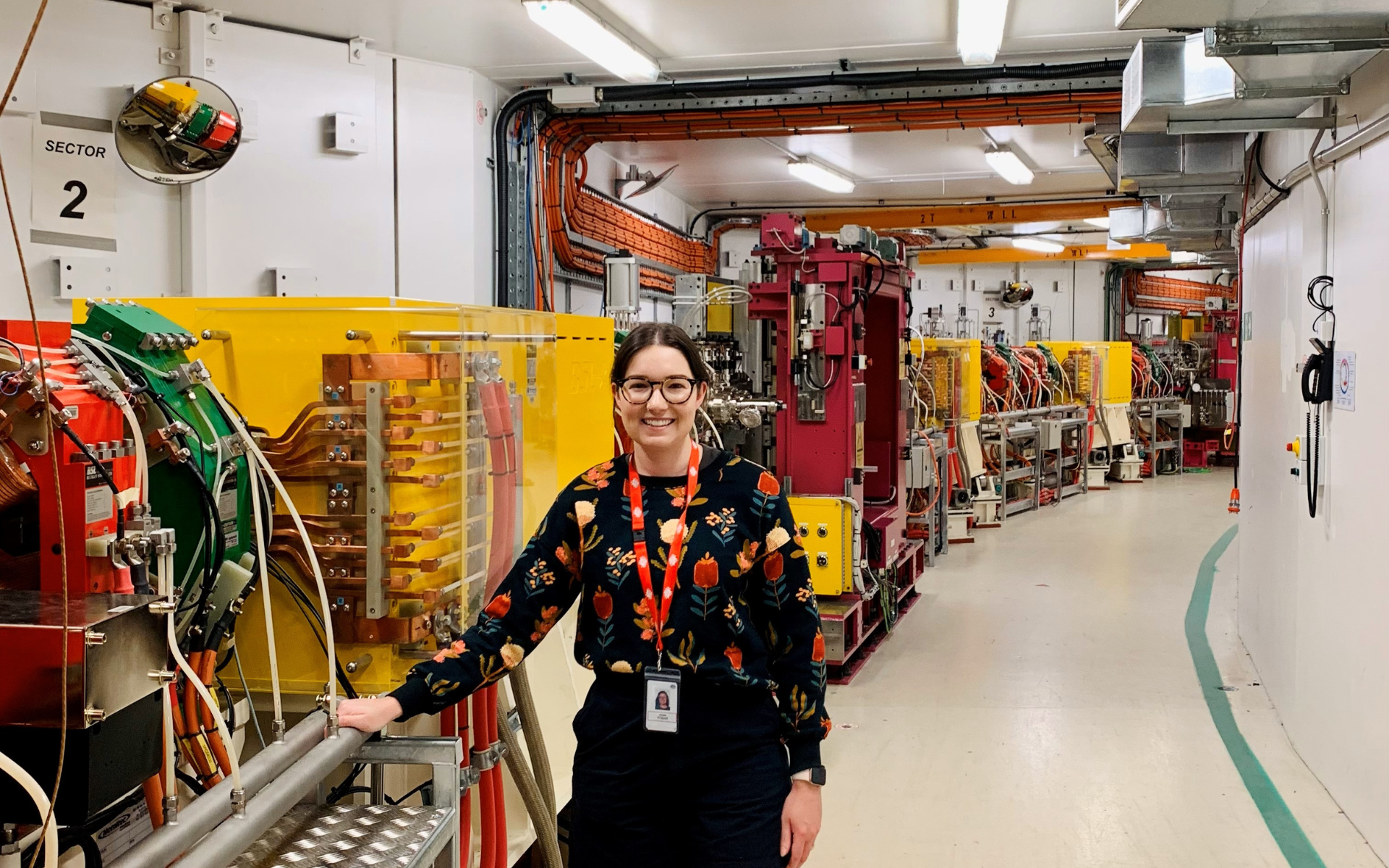
Dr Posar inside the storage ring at the Australian Synchrotron, where electrons are accelerated to near light speed to generate ultra-bright light from infra-red to hard X-rays for cutting-edge scientific research.
Dr Jessie Posar is a Research Fellow in the School of Physics in the Faculty of Engineering and Information Sciences at the University of Wollongong. Dr Posar’s work contributes to the development of next-generation organic semiconductor sensors, including printable wearable sensors engineered to remain stable and high-performing in extreme ionising radiation environments. These sensors can be used in nuclear, bioelectronic and advanced materials sensing.
Tell me about your interest in next-generation organic semiconductor sensors.
Organic semiconductors can form flexible, printable and large-area sensors, opening the door to applications that are not possible with current sensing technologies. However, they do not follow the well-established physics of inorganic solid-state semiconductors such as silicon. This fundamental difference captured my curiosity, as it requires a new way of understanding and interpreting material behaviour. Unlocking the physics of organic semiconductors under x-ray fields demands fresh perspectives on how these materials respond and operate.
How do you use sensors in your research work, and why?
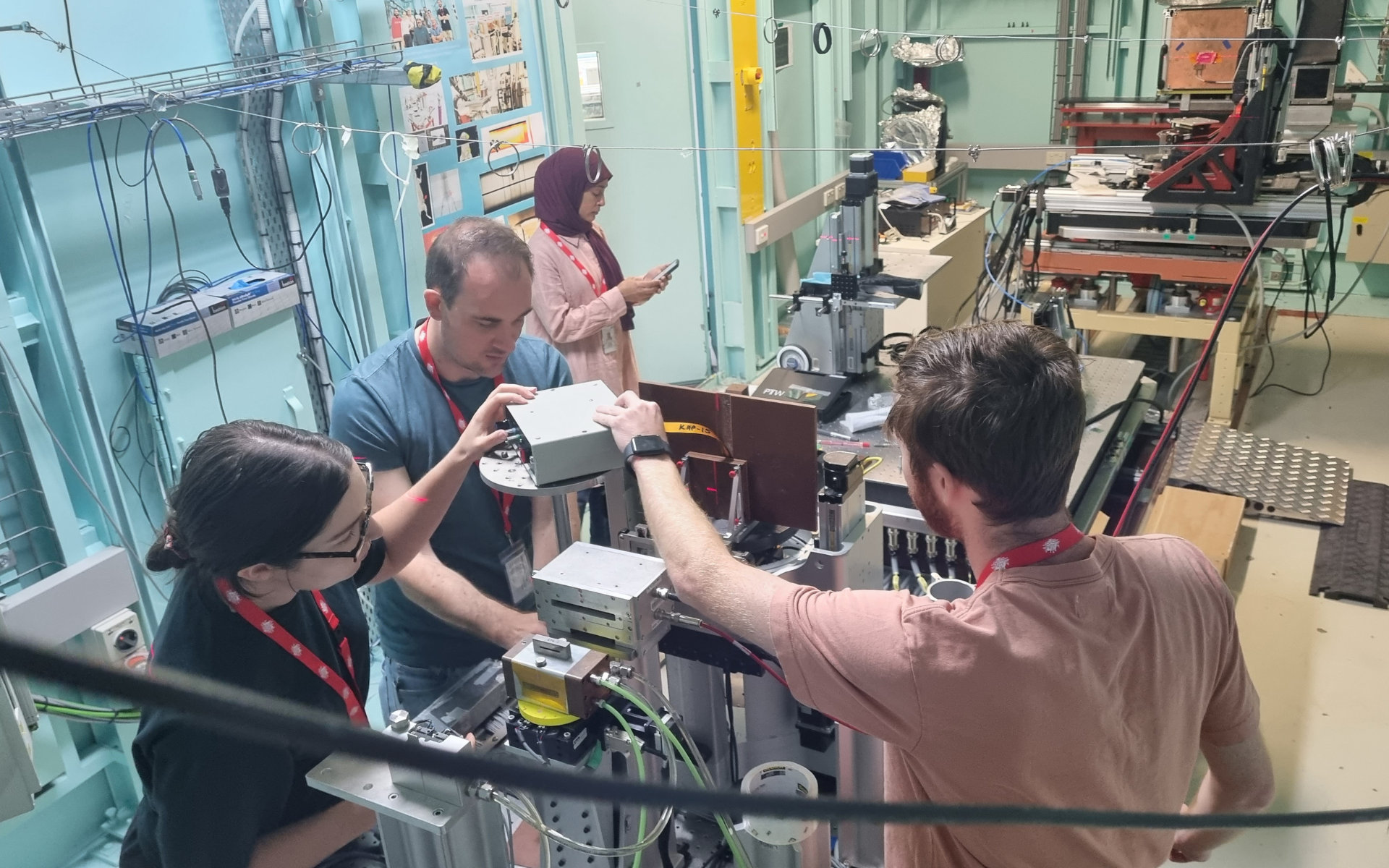
Dr Posar’s research group prepares organic X-ray sensor measurements at the Imaging and Medical Beamline at the Australian Synchrotron, exploring sensor-based quality assurance for Microbeam Radiation Therapy (MRT) for use in untreatable cancers.
Left to right: Dr Posar, A/Prof Matthew Griffith, PhD student Aishah Bashiri and Dr Matthew Large.
I use sensors as both a research tool and a technology-development platform. My work involves designing and studying organic semiconductor-based sensors for the detection of ionising radiation. By using these sensors, I can probe how organic materials respond to x-rays allowing me to uncover the properties that govern charge generation, transport, and stability under ionising conditions.
What’s been your most rewarding achievement or moment in your research career?
Being awarded the National Intelligence Postdoctoral Grant has been the most rewarding achievement of my career. The grant has given me the opportunity to develop a research vision and lead efforts to unlock the physics of organic semiconductors from a new perspective. It marked a transition in my career from contributing to established projects to defining and driving the research direction, including the opportunity to mentor students and build new collaborations.
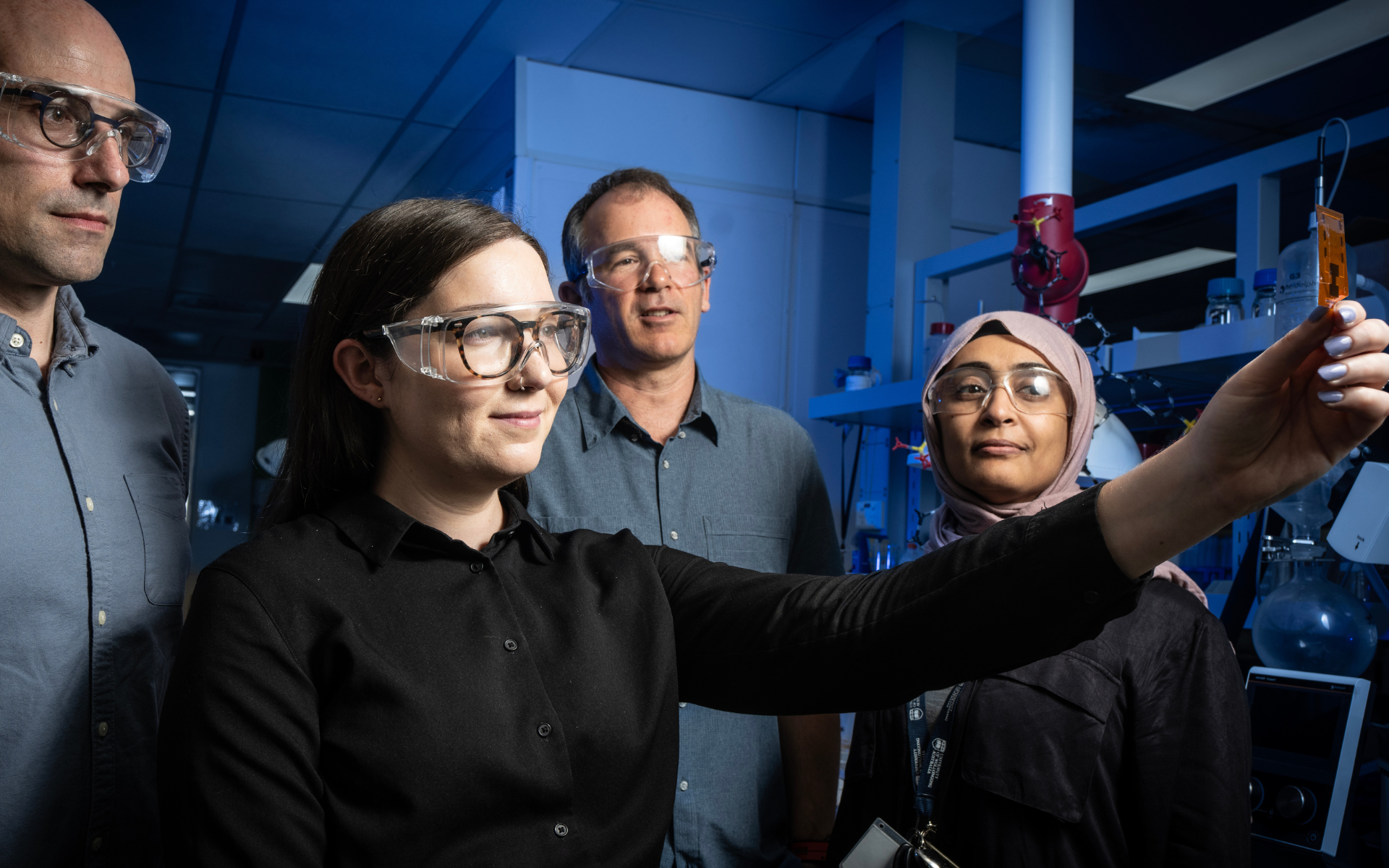
The University of Wollongong research team developing next-generation organic X-ray sensors.
Left to right: Professor Marco Petasecca, Dr Posar, Prof Attila Mozer and PhD Student Aishah Bashiri. Credit: UoW Media
What more are you hoping to achieve in your career?
From a research perspective, I aim to develop new techniques that deepen our understanding of organic semiconductors and accelerate the translation of this technology for accurate and reliable sensing applications. Beyond research, I hope to inspire and mentor the next generation of physicists in Australia, encouraging them to explore their curiosity and pursue impactful scientific careers.
Why is what you do important?
This work is important because it bridges fundamental physics and real-world impact. A deeper understanding of organic semiconductors under ionising radiation is essential to translate these materials into accurate and reliable sensing technologies. This enables the development of wearable personal dosimeters that more closely mimic the human body, improving radiation monitoring in medical imaging and radiotherapy. Ultimately, this can enhance patient safety, inform clinical decision-making, and open new pathways for scalable, low-cost radiation sensing technologies in healthcare.
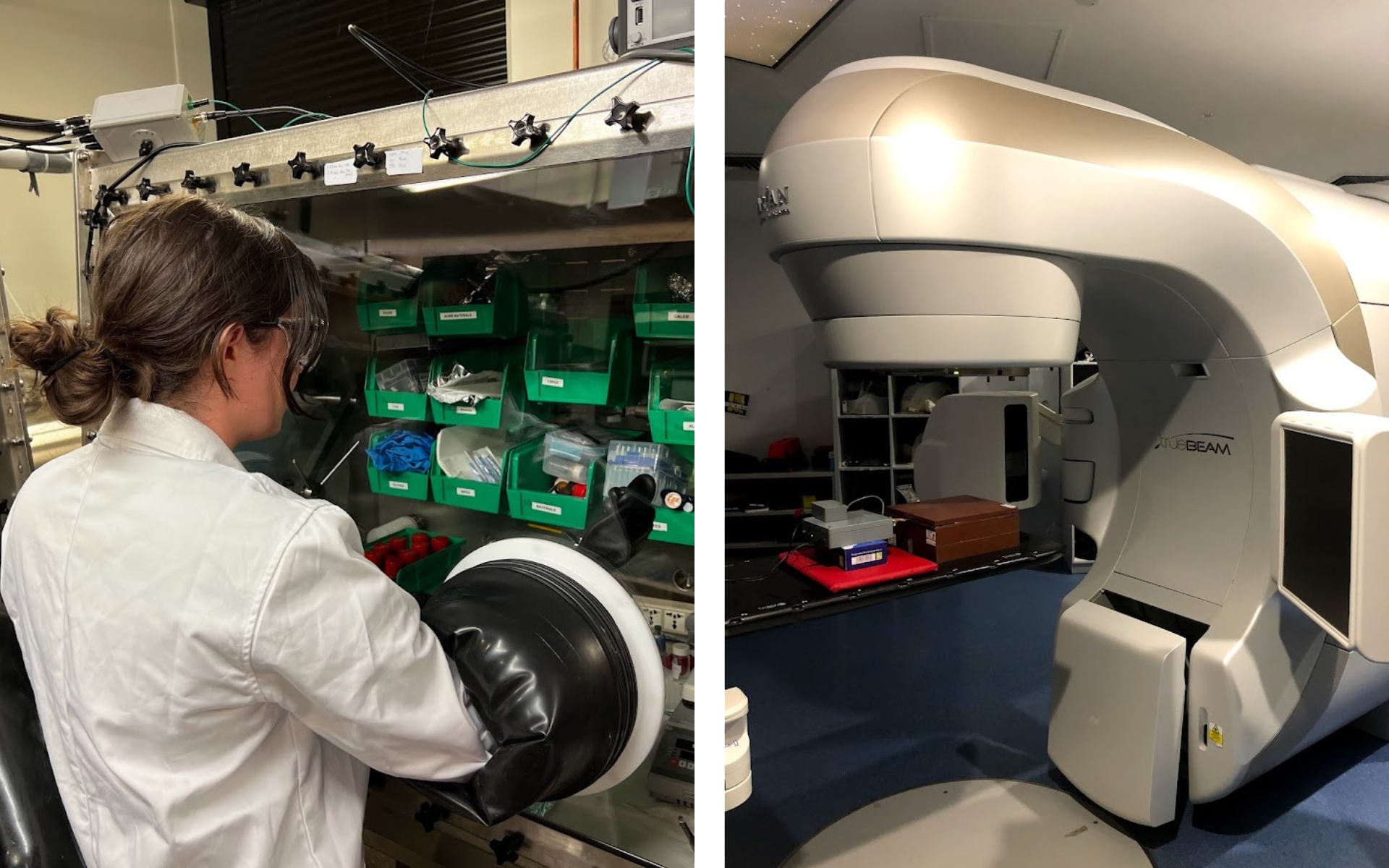
Left: Dr Posar fabricates organic X-ray sensors inside a glove box to prevent air and moisture contamination.
Right: Experimental testing of organic X-ray sensors under clinical conditions at the Illawarra Cancer Care Centre, Wollongong Hospital, using a 6 MV LINAC with custom readout electronics.