
“We need to think big”: Australia urged to accelerate sensing and semiconductor strengths

Former Chief Scientist of Australia, Dr Cathy Foley
Former Chief Scientist of Australia, Dr Cathy Foley has urged Australia’s sensing and semiconductor sectors to work more collaboratively, commercially and strategically to build industries she says will underpin the nation’s future prosperity.
Speaking at the Sensing meets Semiconductors Workshop at Macquarie University last week, Dr Foley urged the sectors to become more ambitious and collaborative rather than waiting for governments to lead innovation.
“We need to be bold. We need to think big. We need to not wait for government to come and solve it for us,” the member of S3B’s Semiconductor Roadmap Advisory Group said.
The event, co-hosted by NSW innovation networks the NSW Smart Sensing Network (NSSN) and the Semiconductor Sector Service Bureau (S3B), brought together researchers, startups, industry leaders and government representatives to tackle one of Australia’s biggest innovation challenges: how to better connect world-leading sensing research with semiconductor capability, industry needs and commercial outcomes.
Dr Foley said sensing and semiconductor technologies are now fundamental to modern life, healthcare, communications, defence and economic resilience, and the two sectors are becoming increasingly inseparable as demand grows for smarter and more connected technologies.
“We cannot live without semiconductor technologies now. We can’t live without sensors,” she said.
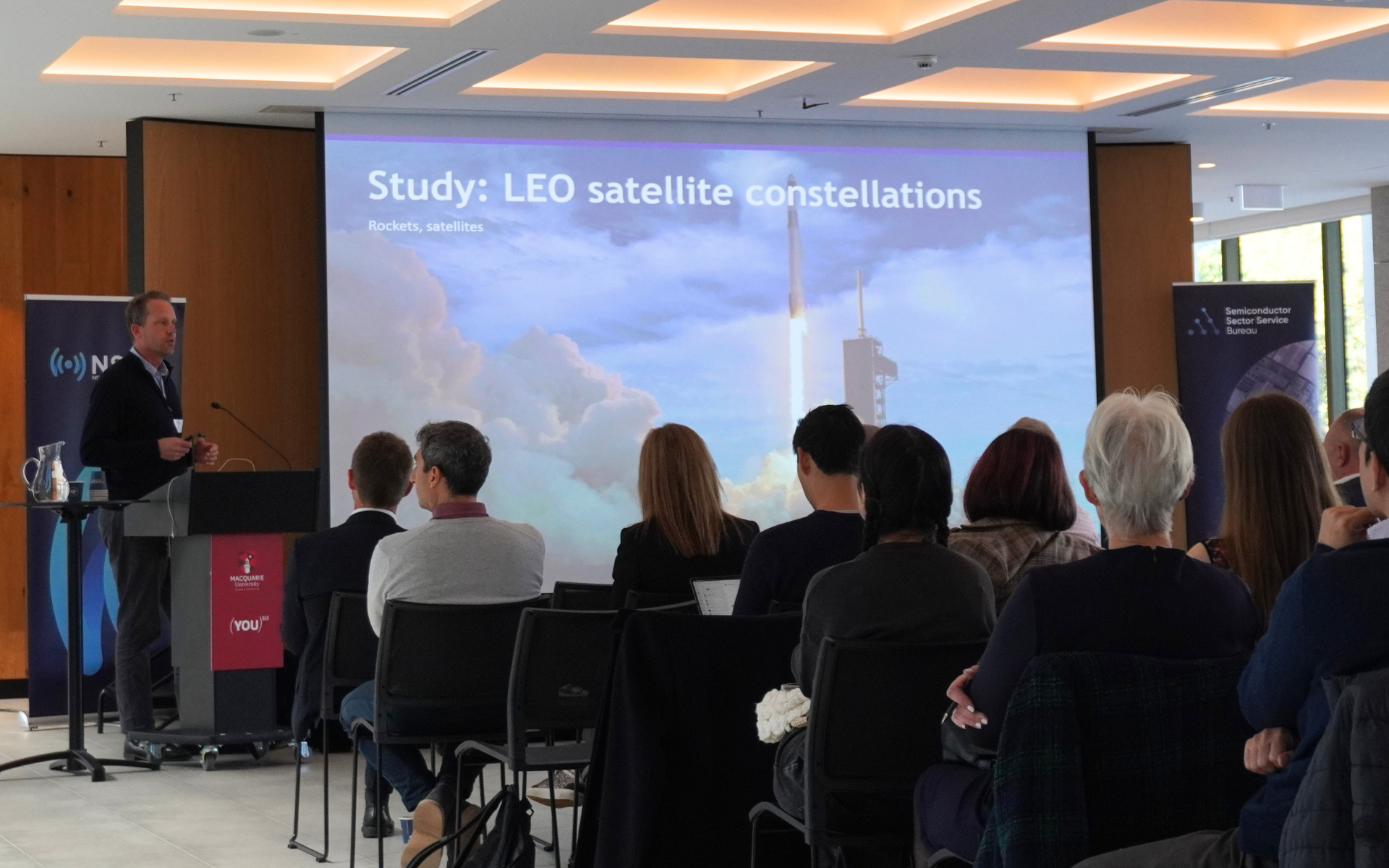
Industry Professor at Macquarie University and founder of Atto Devices, Mike Boers
Australia has world-class research capability, Dr Foley said, but the biggest challenge for the semiconductor and sensing sectors was the “baton change” between research and industry, with Australia historically struggling to turn discoveries into companies, manufacturing capability and commercial success.
“(Australia) is fourth in the world for research, 13th in the world for technology and 82nd in the world when it comes to trade,” she said, citing data from the MIT Observatory of Economic Complexity.
Semiconductors underpin the next wave of innovation
In his keynote address on the global perspective and Australia’s opportunity, Industry Professor at Macquarie University and founder of advanced electronics company Atto Devices, Mike Boers, said semiconductors underpin every major wave of technological innovation, from AI and telecommunications to defence and quantum systems.
“Behind all of these things that you see very vibrantly is a powerful layer, and that’s the semiconductor layer,” he said.
Mr Boers said sensing technologies and semiconductors were deeply interconnected, creating opportunities for Australian researchers and industry to develop integrated technologies and globally competitive products together.
“Wherever you see a sensor, there is a semiconductor,” he said.
“I think what we have is a good opportunity to find some of the best sensor people in research or universities and work together to see if we can make something that’s even better because we’ve integrated it.”
He said the global semiconductor market is approaching US$1 trillion, driven largely by demand for AI technologies, and argued Australia’s modest role in the industry should be viewed as an opportunity for growth.
“Participating more in the semiconductor industry will raise the economic complexity of our country,” he said.
Mr Boers said Australia has strong opportunities in semiconductor design, advanced packaging, critical minerals, photonics, RF systems and quantum technologies, while falling barriers to chip design and initiatives such as the S3B are making it easier for researchers and startups to participate in the sector.
“The barriers to entry for chip design is dropping,” he said. “There are pathways there.”
He also called for stronger local procurement and sovereign capability development to help grow Australia’s semiconductor sector.
“Buy advanced technology from local companies,” he said.
Commercial realities are colliding with research systems

Founder of biotech Agscent, Dr Bronwyn Darlington
Commercialisation challenges and the disconnect between research systems and industry realities were raised in the second keynote address by Dr Bronwyn Darlington, founder of biotech Agscent.
She warned Australia must rethink how industry, universities and government collaborate if it wants to build globally competitive sovereign capability in sensing and semiconductors.
Startups operate under intense commercial pressure while university systems often move on much longer timelines, creating structural barriers to translation, she said.
“When a university and a company like us sit at the same table, we look like we’re doing the same job, but we’re not,” she said.
Dr Darlington, whose company develops breath diagnostic technologies for livestock using nanosensors on semiconductors, said startups are under constant pressure from investors to deliver commercial outcomes quickly, while university systems are designed around longer-term research cycles and grant processes.
“Every pivot has to be on a daily basis to a finished product,” she said.
Dr Darlington argued Australia risks falling behind international competitors unless it becomes faster, more commercially focused and better aligned across the innovation ecosystem.
In one example, she described a three-and-a-half-month delay caused by critical university equipment that had not been serviced in 10 years.
“Australia can do so much. But our work in America says that our competition is coming at us in this space 10 times faster than you think,” she said.
She contrasted her experiences in Australia with collaborations in the United States, including partnerships with NASA, which she said were far more commercially focused and transparent about technical challenges from the outset.
Despite the challenges, she said strong partnerships between industry and academia remain essential, particularly when both sides are aligned around clear commercial and real-world outcomes.
The long road from discovery to deployment
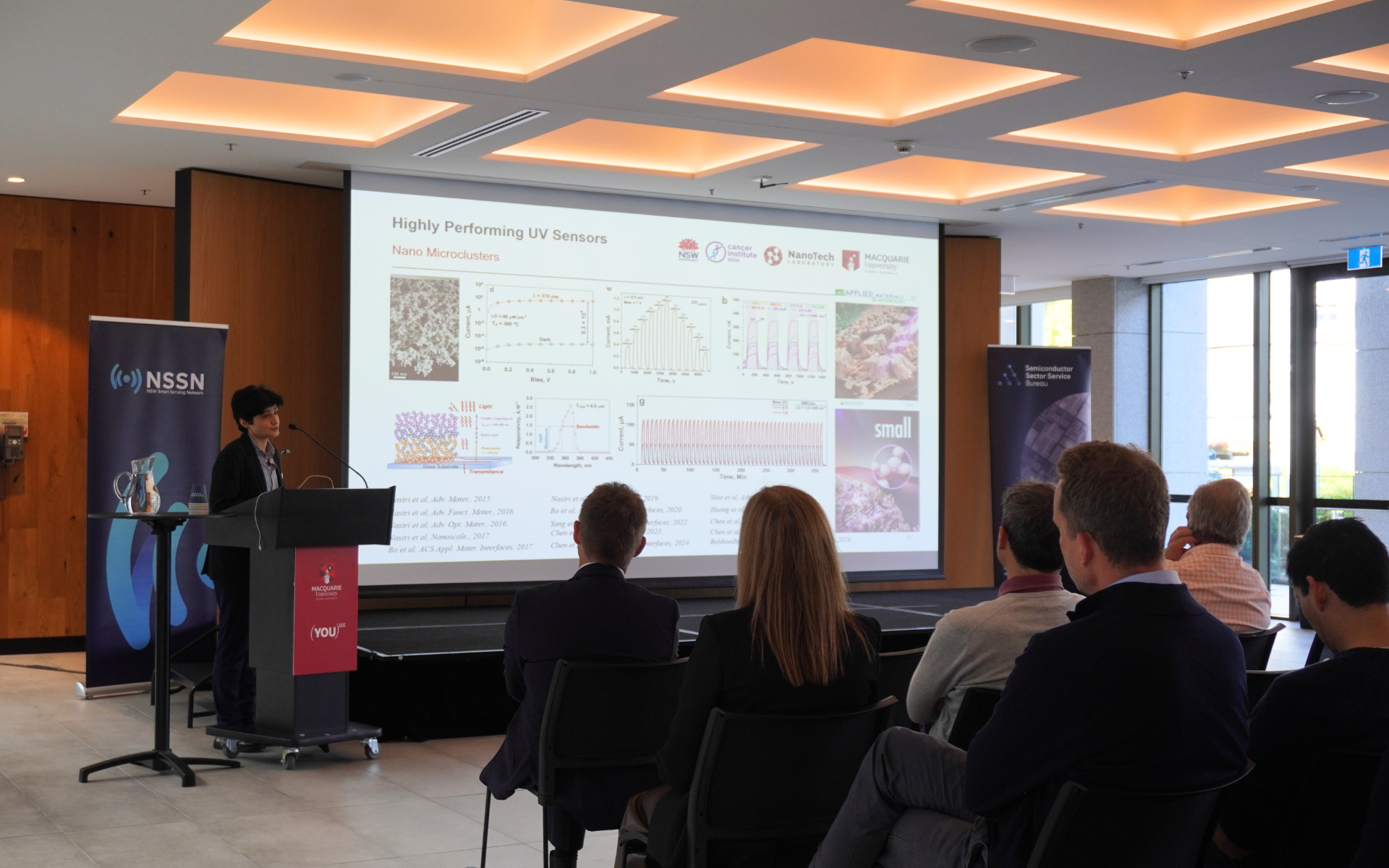
Macquarie University Professor Noushin Nasiri
Speaking on the keynote about her experience of climbing the TRL ladder, Macquarie University Professor Noushin Nasiri also highlighted the long and difficult path from scientific discovery to real-world deployment, explaining that translating advanced sensing technologies can take close to a decade.
The Professor described how her team develops nanomaterial-based sensors capable of detecting ultraviolet radiation, methane, hydrogen and other gases at extremely low concentrations for applications spanning healthcare, agriculture and environmental monitoring.
She said the journey from scientific discovery to a commercially viable device is far more complex than simply proving a sensor works in the laboratory.
“The first time I felt comfortable enough to talk about translation was in 2022,” the Nanotechnologist said of a UV sensing project she began during her PhD in 2013.
Prof Nasiri described the extensive testing required to ensure sensors operate reliably in real-world conditions, including calibrating devices for humidity, temperature and environmental variability.
“The first time I actually made the sensor, it was okay for two months, it was not really sensitive to humidity. But after two months, it actually absorbed a lot of humidity, and the sensor died in one week, because Sydney is very humid,” she said.
Long-term industry collaborations were important, she said, pointing to projects with Queensland agritech company BeeSTAR and partnerships with Agscent.
Reflecting on the relationship between academia and industry, she said both sectors operated with different but complementary mindsets.
“I always consider myself as an artist. I think academics are artists … we need that flexibility to make mistakes and to be unsuccessful and to fail and still being supported because discovery and innovation take time,” she said.
“But at the same time, there is an industry, with all of those pressures and the urgency they have to commercialise it ‘yesterday’. Yet we need each other, both of us. Because without discovery and innovation, there is nothing to commercialise.”
Prof Nasiri stressed that long-term support from industry, government and organisations such as the NSSN is essential to help advanced technologies move beyond the laboratory.
“Without this type of support from government, from industry, those sensors are going to stay in the lab forever,” she said.
Building Australia’s semiconductor value chain
S3B Acting Director Matthew Worsman told the workshop semiconductors were the “hidden engines” powering modern society.
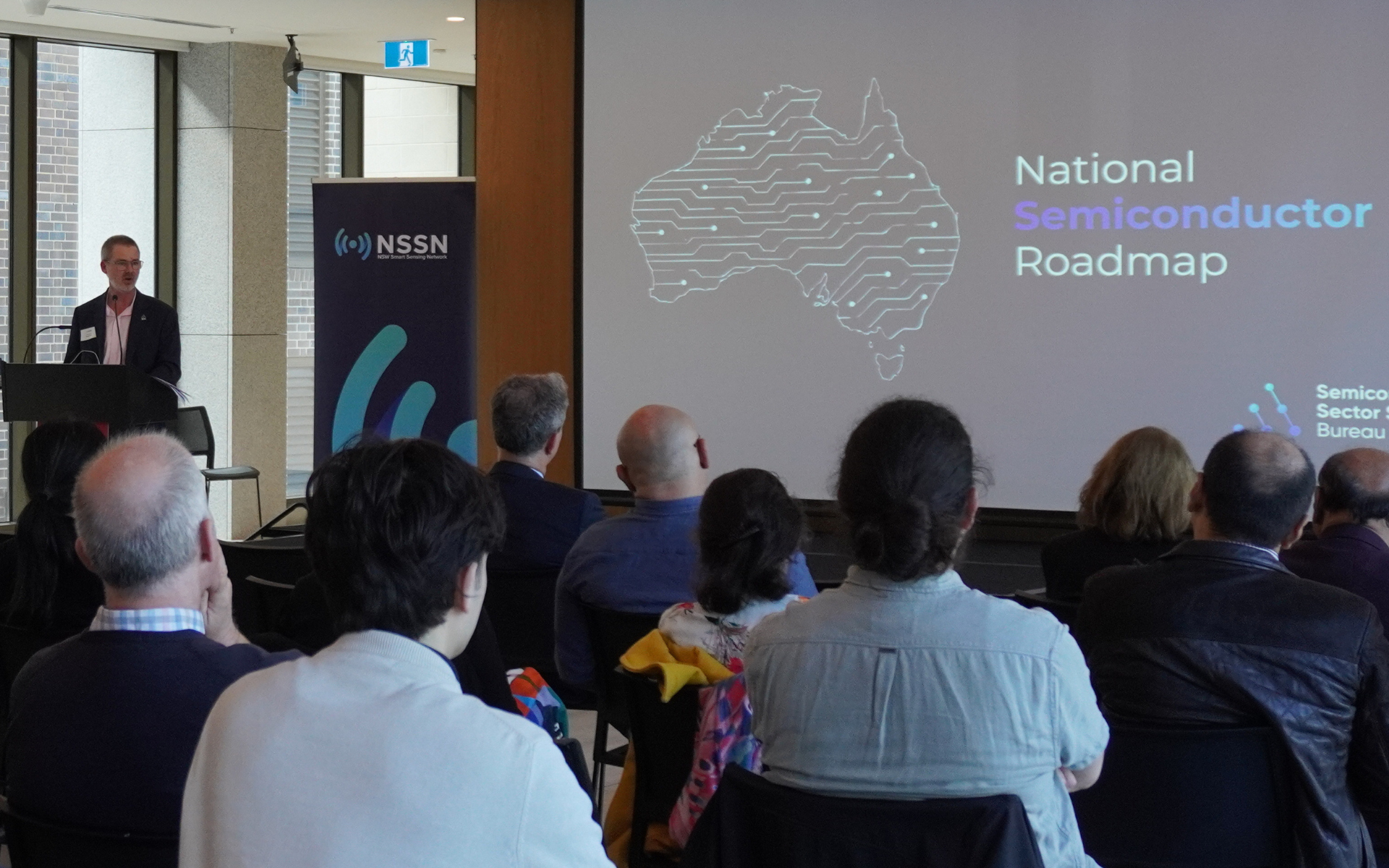
S3B Acting Director, Matthew Worsman
“As the world becomes more connected, the demand for semiconductors, and by extension sensors, is seeing exponential growth, driven by smart devices, electric vehicles, AI and cloud computing,” he said.
Australia has a “modest” semiconductor capability, “but it is there and it is vibrant. From my point of view, it’s about the value chain”.
Mr Worsman said Australia should focus strategically on areas where it can compete globally, including advanced packaging, sensing integration and semiconductor design, rather than pursuing full self-sufficiency.
“It’s not about self-sufficiency, but about making deliberate choices, leveraging international partnerships, aligning public and private investment and focusing on areas that Australia can have a real impact,” he said.
He said initiatives such as the planned AMRF Semiconductor Advanced Packaging Facility in Western Sydney is a key development that will support the integration of sensing technologies into smarter electronic systems.
The National Semiconductor Roadmap will also help create a more coordinated long-term strategy for the sector, he said.
“At a time when semiconductors underpin nearly every critical technology and are considered essential infrastructure, their strategic importance is not fully recognised in Australia,” he said.
“The roadmap is about changing that and providing a coherent national plan that supports investment, strengthens capability and positions us for the long term economic and sovereign resilience.”
Turning research excellence into sovereign capability
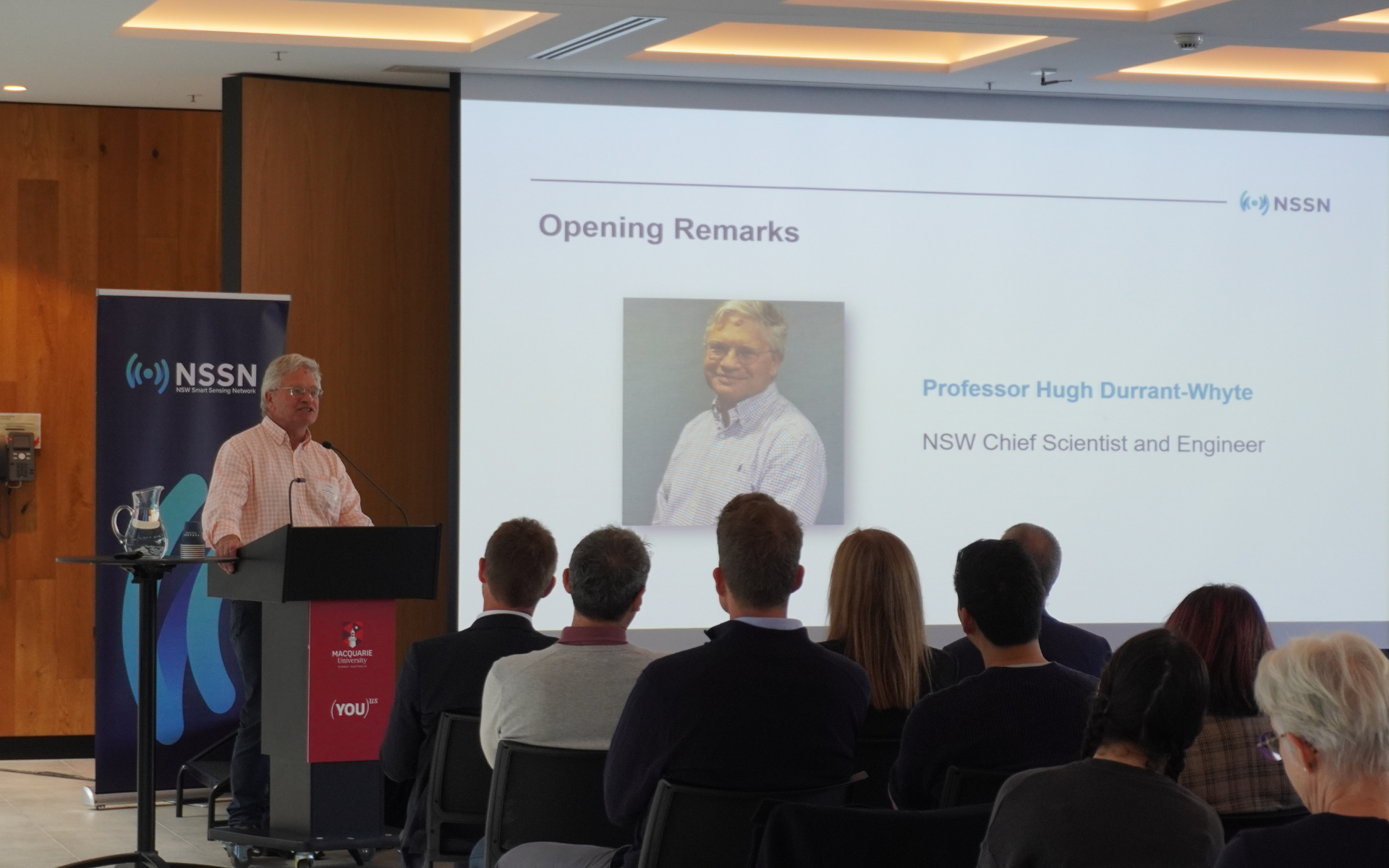
NSW Chief Scientist & Engineer, Hugh Durrant-Whyte
NSW Chief Scientist & Engineer Hugh Durrant-Whyte said sensing and semiconductor technologies represented a major opportunity for Australia to build new industries, sovereign capability and long-term economic prosperity.
The member of the S3B National Semiconductor Roadmap Advisory Group called on the sectors to focus on turning research excellence into commercial outcomes and scalable businesses.
Prof Durrant-Whyte called for stronger collaboration between universities, industry and government to help build supply chains, technology precincts, and new companies focused on sensing and semiconductors.
He urged academics to embrace entrepreneurship, saying he wanted to return next year and see more researchers “out there with your businesses doing something really, really interesting” that could drive “new businesses, new growth opportunities, and ultimately prosperity for this country.”
Next steps from the workshop will include developing a report capturing the day’s discussions, opportunities and challenges, with organisers also aiming to foster new collaborative projects and partnerships emerging from connections made at the event.