
Wind turbines are helping power Australia’s renewable energy transition, but concerns about their impact on birds persist, with reliable data on collision deaths difficult to obtain.
Now, researchers at the University of Sydney and UNSW are developing an artificial intelligence powered camera network to provide reliable evidence of bird collisions at wind farms.
"We don't know globally, or even nationally, how many birds the wind turbines actually kill, because we don't have reliable data," Lead researcher Dr Zihao Wang, a lecturer in the University of Sydney’s School of Aerospace, Mechanical and Mechatronic Engineering says.
“Our goal is to provide reliable evidence of bird strikes so operators can make informed decisions about when to stop or slow turbines, while helping developers identify lower-risk locations for new wind farms and supporting the continued generation of renewable energy.”
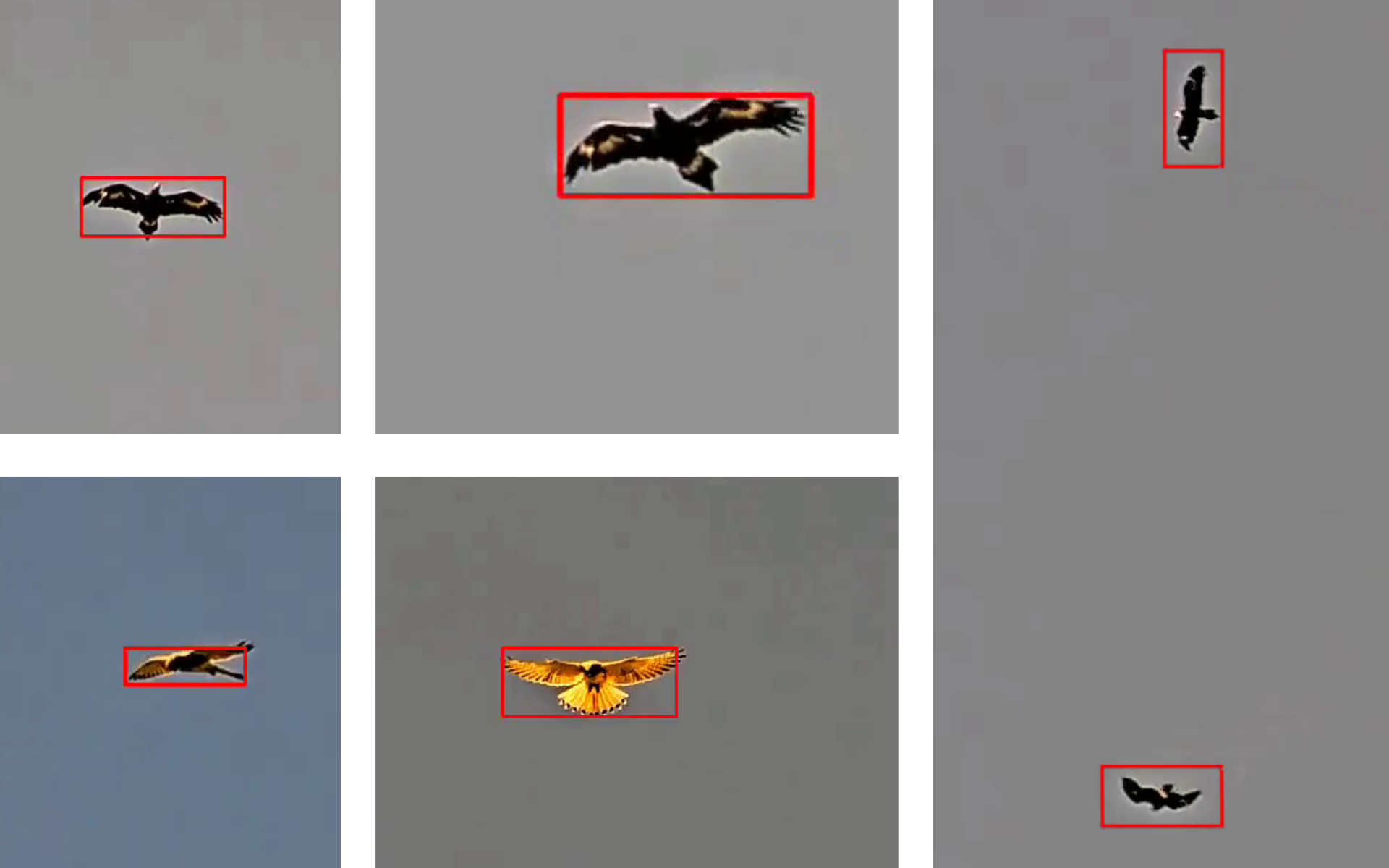
Birds fly near wind turbines, captured by an AI-powered camera system being developed in the project to detect, track and identify birds at wind farms. Credit: Hoeksec
The technology is being trialled at a wind farm in NSW.
Using artificial intelligence (AI), the system tracks birds flying near turbines, with the aim of identifying individual species and detecting collisions.
The project brings together researchers from the University of Sydney and UNSW with industry partner HoekSec and is funded by the NSW Smart Sensing Network’s (NSSN) 2026 Grand Challenge Fund.
Reliable bird monitoring is increasingly important as NSW expands wind energy generation to meet its net zero emissions target by 2050. Wind farms can face operational restrictions and penalties for harming protected species under federal environmental laws.
Despite Australia's growing wind energy industry, much of the research on bird collisions comes from the United States and Europe. Studies suggest collision risks vary between species and locations, with some birds more vulnerable than others and heightened risks in certain conditions, including darkness.

Dr Zihao Wang.
Credit: Supplied
Wind farm operators in Australia currently rely on periodic carcass searches to estimate bird fatalities, but Dr Wang says remains can be missed, and deaths cannot always be attributed to turbine collisions.
“Reliable, site-specific data is essential because bird activity varies between locations, and every wind farm presents unique challenges,” he says.
The developing technology could help operators assess proposed wind farm sites and evaluate the effectiveness of protective measures, such as temporarily stopping turbines or using drones to deter birds.
By monitoring bird activity and collisions over several months, the AI-powered system could help operators make informed decisions, avoid unnecessary shutdowns and protect vulnerable species.
How AI cameras track birds in flight
The system uses multiple cameras to detect and track birds near wind turbines. A number of stationary cameras scan the sky, using AI to distinguish birds from other moving objects, while a central pan-tilt-zoom camera follows detected birds to capture images for species identification.
“We know the AI model can work in theory, but it takes a lot of training,” Dr Wang says. “We spend a significant amount of time collecting data and training the model so the camera can track birds and capture clear images.”
Each module monitors one turbine, with multiple modules potentially deployed across a wind farm to provide wider coverage. The researchers plan to expand testing to six modules simultaneously, monitoring bird movements around several turbines to collect more comprehensive data.

A/Prof Richard Wu.
Credit: Supplied
UNSW co-investigator Associate Professor Richard Wu, from the School of Aviation, is developing the network infrastructure to transmit data from remote cameras to servers for processing and analysis.
“Although Starlink allows us to access the internet from remote locations, the distance between cameras and the WiFi router across multiple wind turbines, and the size of high-resolution videos make data transmission challenging,” A/Prof Wu says.
“We utilise local devices for fast processing and inference, while transmitting large data to the Cloud for offline training.”
The project builds on a partnership with industry partner HoekSec, which brings hardware expertise in aircraft monitoring technology.
Early success
The camera module at the trial wind farm has already demonstrated a proof of concept: the system can detect and track birds in flight, including wedge-tailed eagles and other birds of prey.
While the AI can currently distinguish birds from other moving objects, the next step is training it to identify individual species.

A/Prof Kate Brandis.
Credit: Supplied.
UNSW co-investigator A/Prof Kate Brandis, from the Centre for Ecosystem Science, is helping identify birds captured on camera to train the AI model and is investigating how different species behave around wind turbines.
“With the rapid and ongoing development of wind energy and the use of large turbines it is critical to limit the impact on the environment,” A/Prof Brandis says.
“This project aims to do this by understanding bird behaviour and mitigating impacts on birds.”
The findings could help establish which species are most vulnerable and how birds respond to turbines, potentially informing future wind farm operations and design.
From monitoring birds to preventing collisions
Dr Wang says that, if proven reliable, the system could be integrated with turbine controls to automatically slow or stop turbines when protected species approach.
Future applications could also include active bird deterrents, although these are beyond the scope of the current project.
While the current research focuses on daylight monitoring at onshore wind farms, Dr Wang says the technology could eventually be adapted for offshore developments. Further research would also be needed to monitor wildlife at night, including bats.

Dr Tom Hu.
Credit: Supplied
NSSN Theme Lead Dr Tom Hu says the research project highlights the potential of smart sensing to support renewable energy development while protecting biodiversity.
“By providing reliable evidence of bird activity and collisions, this technology could help wind farm operators make better decisions about protecting wildlife, assess the effectiveness of mitigation measures and build public confidence in renewable energy,” Dr Hu says.