
Australia can lead the next wave of advanced hardware, says Emergence Quantum CEO
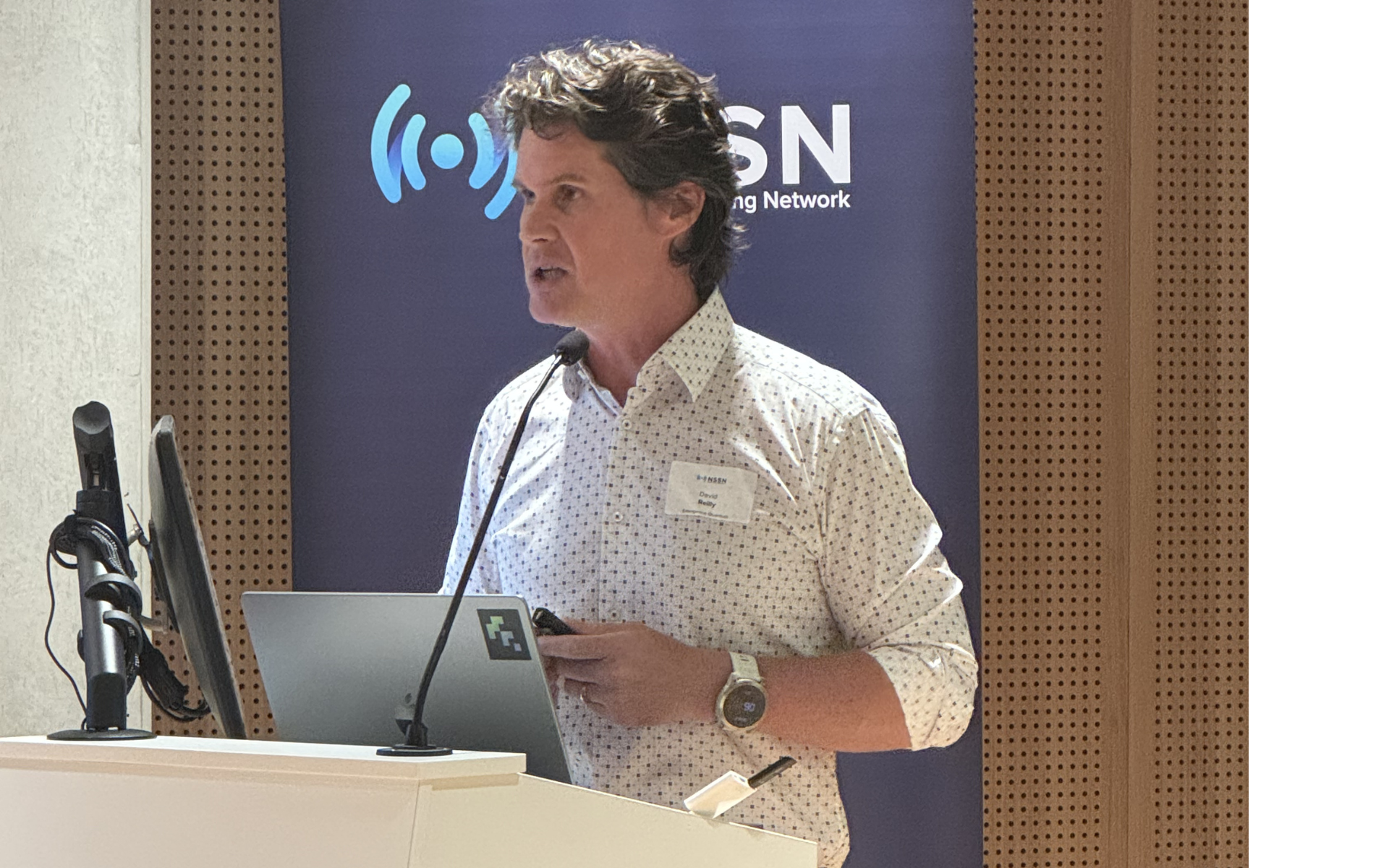
Prof David Reilly spoke at the NSSN’s Sensing Industry Connect
Co-Founder and CEO of deep tech startup Emergence Quantum, Professor David Reilly, said Australia is well positioned to build the next generation of hardware beyond traditional silicon computing at last week’s NSSN Sensing Industry Connect at the University of Sydney.
The Professor of Quantum Physics said Australia has an opportunity to lead across quantum infrastructure, energy-efficient computing and large-scale sensing systems.
Co-founded with Prof Thomas Ohki, Emergence Quantum launched last year in partnership with the University of Sydney after Prof Reilly’s former quantum computing team chose to remain in Australia rather than relocate overseas with Microsoft.
“We think that Australia’s the place to do the type of research that we want to do, to market the products that we think are going to have impact,” Prof Reilly said.
Prof Reilly said computing is at a critical turning point.
Since the invention of the transistor in 1947, increasingly sophisticated silicon systems have driven progress, but traditional digital hardware is now approaching fundamental limits as demand grows for advanced AI, robotics and next-generation sensing.
“The question I want to pose, and I'm certainly not the only one to be doing this at this point in time, but looking back to the transistor, through to the integrated circuit, is the next 10 years, 20 years, 30 years, 40 years, going to just keep on rolling in the same way?,” he said.
“Do we have the hardware that you need to do robotics, autonomous manufacturing, new chemicals, new drugs, new pharmaceuticals, new types of sensors that are able to detect signals that are far fainter than what we can do today with bandwidths that we can't achieve at the moment?”
He described massive AI data centres as a “brute force” approach, delivering performance gains at significant energy and environmental cost, and said they highlight the need for new hardware approaches.
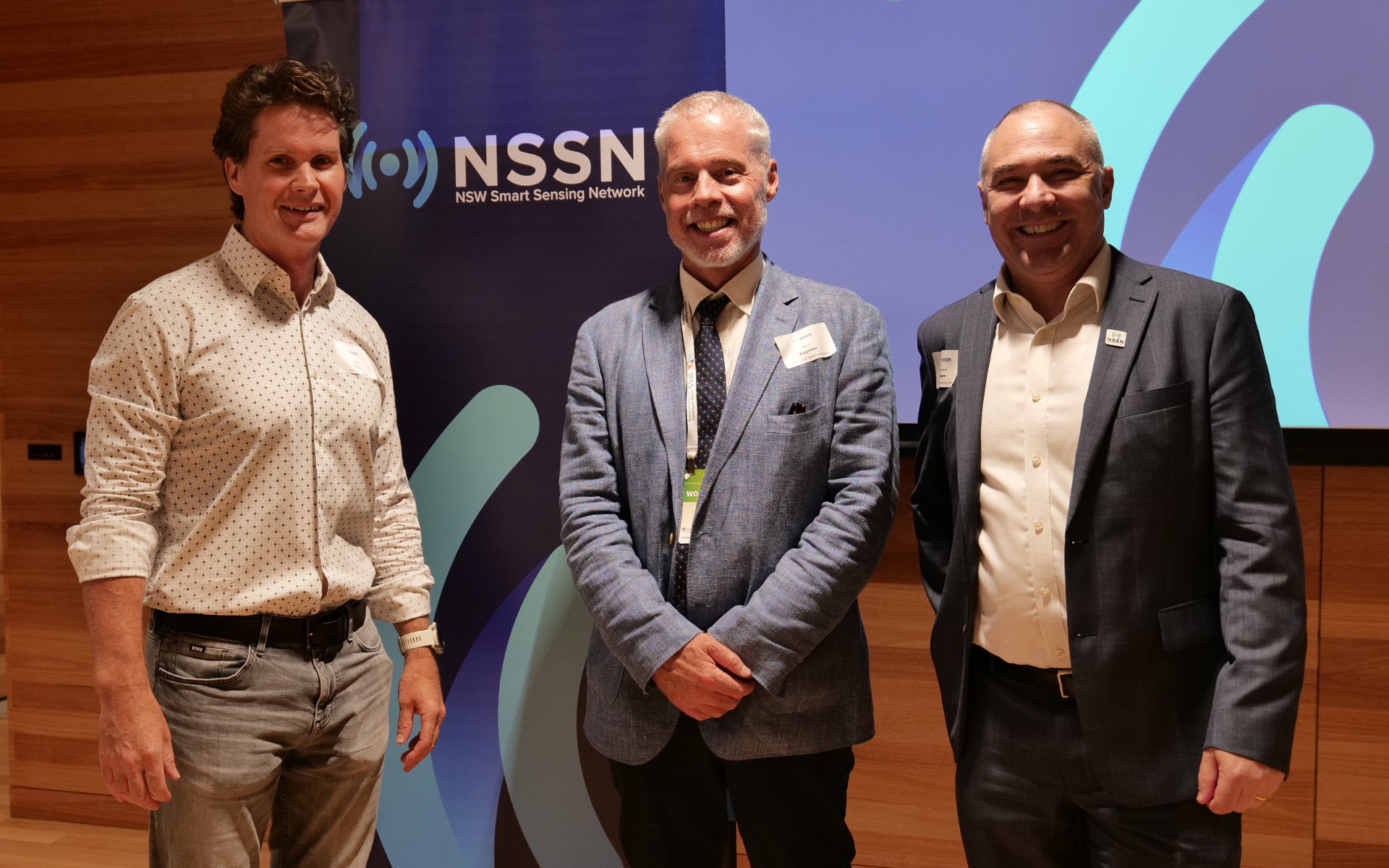
(Left to right): Prof David Reilly, NSSN Co-Director Prof Benjamin Eggleton, NSSN Co-Director Julien Epps.
“AI is fundamentally limited by the underpinning hardware, and this is what we really need, I think, to disrupt,” Prof Reilly said.
He said a “huge area” for Emergence Quantum was “moving beyond quantum, out into data centres.”
“Efficient cooling infrastructure, alternate computer paradigms, neuromorphic computing, reservoir computing, analogue computing, whether it's in semiconductors, superconductors, or whatever, we're interested, and we're building our systems now, that bring together those different modalities.”
Emergence Quantum is positioning itself to help drive that disruption through three interconnected technology pillars: quantum infrastructure, alternative energy-efficient computing architectures and advanced sensing platforms, he said.
“It's no longer just the domain of the Microsofts, the Googles, the kind of big end of town doing that manufacturing,” he said.
“Of course, we need that too, but I think we really have a renewed enthusiasm for fundamental research and redefining the partnerships between industry and universities.”
Rather than focusing on a single technology, the company is building shared technical capabilities, including cryogenic systems, advanced interconnects and thermal management, which apply across computing and sensing.
The Professor of Quantum Physics said sensing will play a central role in future hardware ecosystems, particularly when combined with edge AI.
Integrating sensors with efficient local computing could enable real-time decision-making while reducing reliance on energy-intensive cloud infrastructure.
He also emphasised the importance of strong university–industry partnerships, noting that progress in advanced hardware depends on institutions willing to take risks and collaborate closely with startups.
“(Delivering transformative technology), making it actually possible, I think, takes people with vision and patience,” he said.
Emergence Quantum’s business model reflects this long-term perspective, he said.
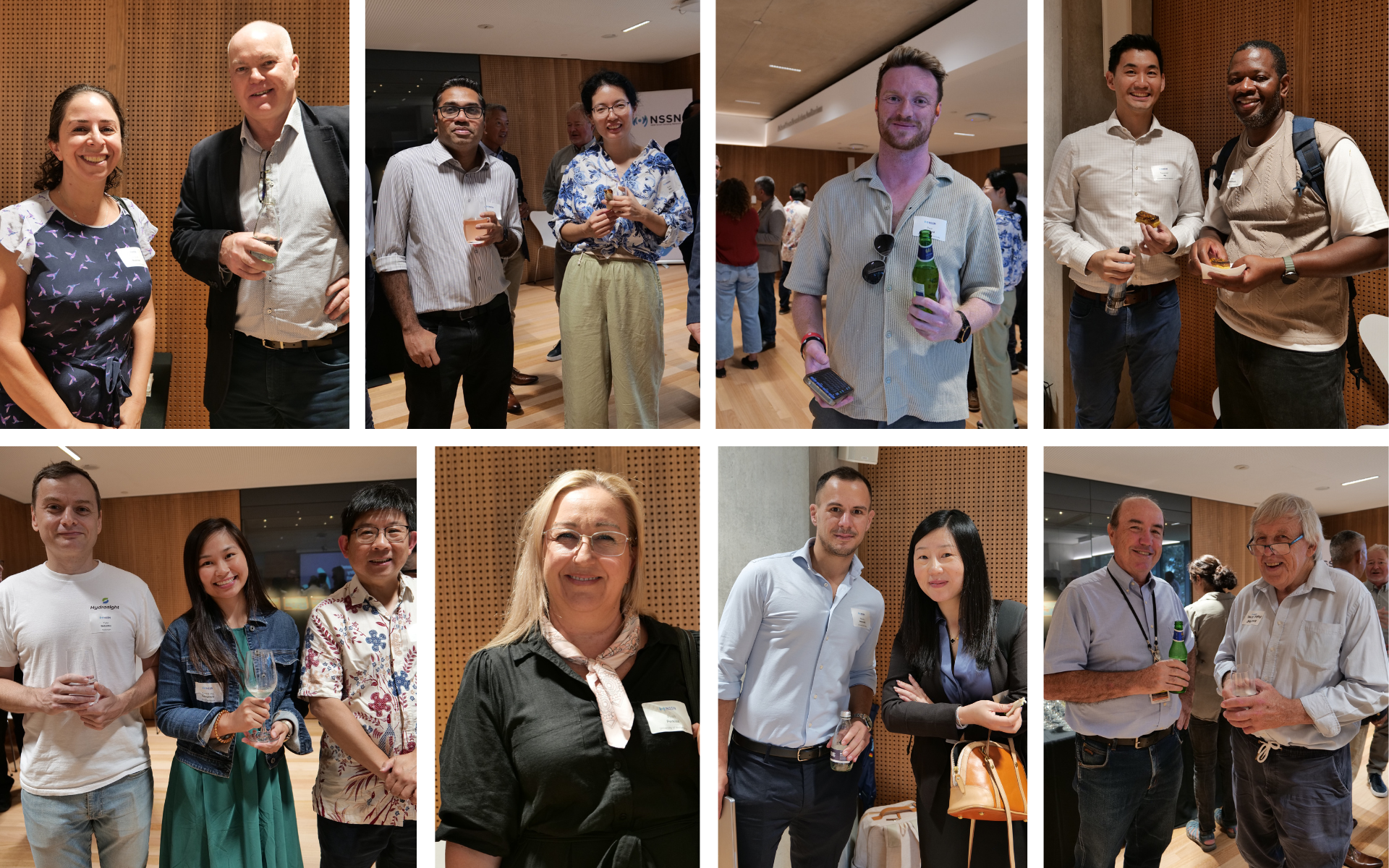
Attendees at the Sensing Industry Connect held at the University of Sydney’s Chau Chak Wing Museum.
The company is currently funded through R&D contracts with a diverse customer base, allowing it to build capability and partnerships while developing a product roadmap for future systems.
He told the sensing community that advances in sensing, computing and quantum technologies are increasingly interconnected.
Australia has the talent and institutional capability to lead in this area with continued investment in hardware innovation and collaboration, Prof Reilly said.
The event was opened by NSSN Co-Director Prof Benjamin Eggleton, Co-Director of the NSSN and Pro-Vice-Chancellor (Research), at the University of Sydney.
The next Sensing Industry Connect will be held at the University of Technology on Monday 11 May.