
NSSN asbestos sensing research helps inform $16 million NSW Government response
Research by the NSW Smart Sensing Network (NSSN) into emerging technologies for detecting asbestos has helped inform a new NSW Government approach to improving the management of asbestos waste.
The NSW Government launched its NSW Asbestos Plan of Action in July 2026, backed by $16 million in new investment to improve how asbestos waste is managed and create safer environments for workers and the community.
The plan forms the Government’s detailed response to advice from the NSW Office of the Chief Scientist & Engineer (OCSE) on the management of asbestos in recovered fines and other materials intended for beneficial reuse.
The NSSN contributed one of three expert papers commissioned by OCSE in preparing its Final Report.

NSSN Environment & Agriculture Theme Lead Dr Tom Hu. Credit: Supplied
Authored by the NSSN’s Environment & Agriculture Theme Lead Dr Tom Hu, the Asbestos Sensing Review: Emerging technologies for asbestos in waste report examined current and emerging technologies that could help provide faster and more effective detection of asbestos in construction, demolition and recovered waste.
The study was commissioned specifically to provide OCSE with an updated perspective on technologies relevant to real-time asbestos sensing.
Current approaches rely heavily on skilled visual inspection and laboratory analysis of samples, which can slow waste processing and create uncertainty about whether materials can be safely recovered.
The NSSN review found that reliable real-time asbestos measurement using a single sensing system remains challenging and that emerging approaches should work alongside approved standard methods.
Promising technologies identified in the review included AI-assisted microscopy and automated fibre counting, near-infrared spectroscopy, hyperspectral imaging and machine-learning-based image recognition, alongside other emerging approaches including fluorescence-based detection and LiDAR.
Dr Hu said the opportunity was to determine how emerging technologies could be applied effectively in real-world waste environments.
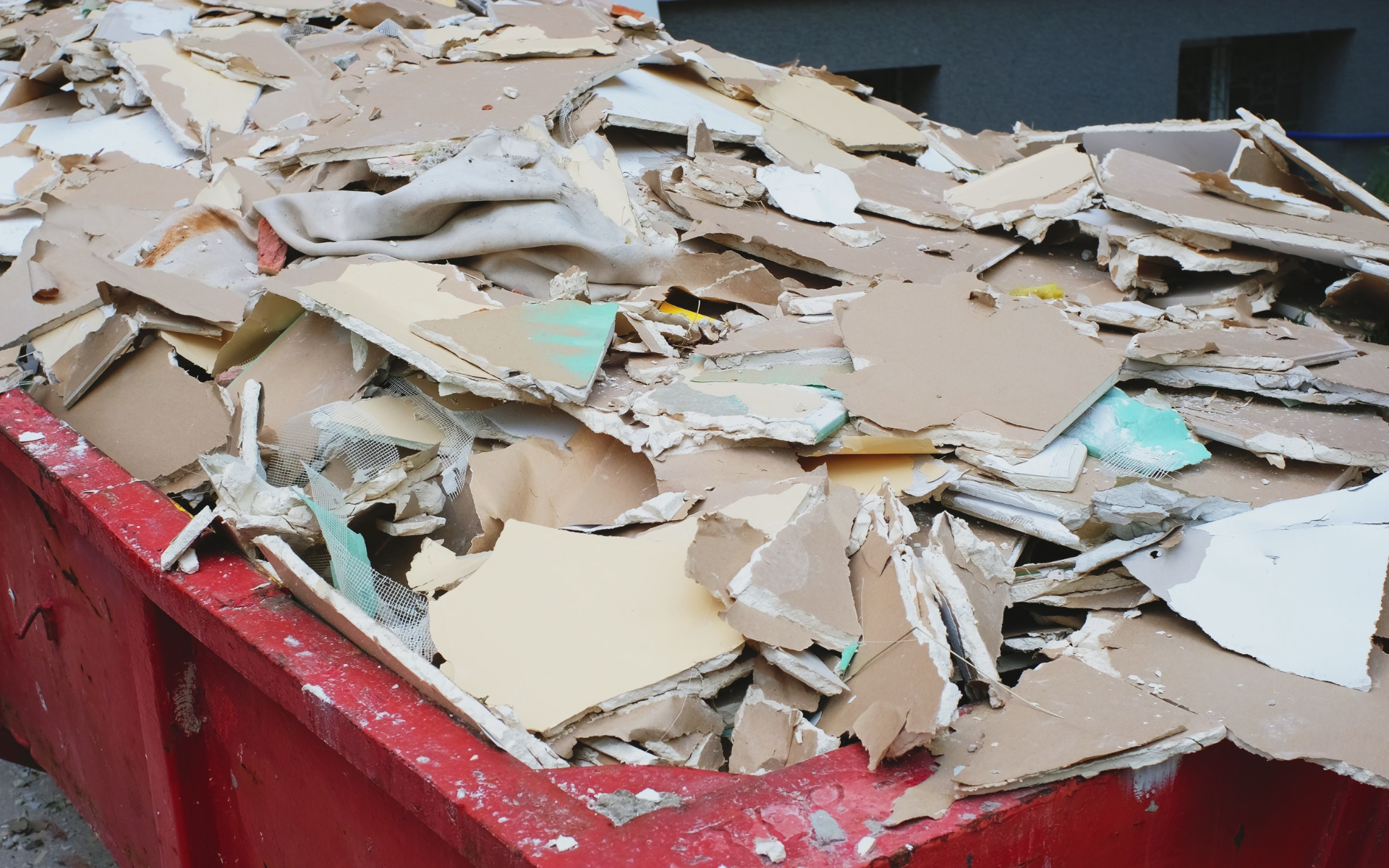
Asbestos in demolition waste poses serious health risks and can prevent materials from being safely recovered and recycled. Credit: AdobeStock
“There is unlikely to be a single technology that can provide reliable real-time asbestos detection across every application,” Dr Hu said.
“Different environments will require different sensing approaches, working alongside established methods. The opportunity now is to identify where emerging technologies can make asbestos detection faster, more effective and more practical.”
The NSSN study is particularly linked to Recommendation 8 of OCSE’s Final Report, which recommended that the NSW Government remain aware of emerging technologies that can assist with asbestos detection and consider supporting the development and trialling of technologies with high potential through a new NSW business research challenge program.
The NSW Government’s response lists Recommendation 8 as supported.
The new asbestos plan commits the NSW Government to keeping track of emerging asbestos detection technologies as they develop and considering support for promising technologies that could make asbestos detection faster, more efficient and more cost-effective across the waste and recycling process.
The Government’s broader response to the OCSE review is backed by $16 million, including $9 million for a two-year trial providing free household asbestos collection and disposal.
Read the NSSN’s Asbestos Sensing Review: Emerging technologies for asbestos in waste report; and the NSW Office of the Chief Scientist & Engineer’s Management of asbestos in recovered fines and recovered materials for beneficial reuse in NSW.