
The vision, collaboration and leadership behind a decade of smart sensing innovation
When the NSW Smart Sensing Network (NSSN) was established in 2016, it set out to do something few organisations had attempted before: bring together the collective expertise of New South Wales universities, industry and government to solve real-world challenges through smart sensing technologies.
Ten years on, the network has become a nationally recognised model for research translation and collaboration, helping deliver innovative sensing solutions across human health, natural hazards, net zero, smart places, and the environment and agriculture.
As the NSSN marks its 10-year anniversary, the people who helped create and lead the network reflect on why it was needed, how it was built, and why its collaborative model remains as important today as ever.
A solution to complex government challenges
Former NSW Chief Scientist & Engineer Professor Mary O'Kane said the idea for the NSSN emerged from a growing need to better connect world-class research with government decision-making.

Professor Mary O’Kane. Credit: Supplied
During her time as Chief Scientist, her Office was frequently called upon to advise the NSW Government on complex issues including coal seam gas, PFAS contamination, koala population decline, energy security and coal train impacts.
"In almost every case, our recommendations included building major sensor systems for monitoring and enabling rapid responses," Professor O'Kane said.
"At the same time, I could see the extraordinary strength that existed across NSW universities and startups in sensing research and innovation."
Recognising the gap between government needs and research capability, Professor O'Kane proposed a new model—a multi-university network operating within a commercial framework that would allow government to directly engage researchers to develop innovative sensing solutions.
She brought together Professors Ben Eggleton and Justin Gooding to lead the initiative.
"I still remember vividly the day I introduced Ben Eggleton to Justin Gooding and asked them if they would lead the Network," she said.
"I'm enormously grateful to them, to Susan Pond, and to everyone who stepped forward to create the NSSN and make it such a success."
Building a collaborative ecosystem
As the NSSN's inaugural Co-Director, Professor Justin Gooding said the NSSN was established to build a smart sensing ecosystem that connected universities, government and industry to address real-world challenges.

Professor Justin Gooding. Credit: Supplied
"The original vision was to build a smart sensing ecosystem in NSW that could solve local challenges with solutions that had global implications," Professor Gooding said.
The network focused on addressing government and industry-led challenges that could produce products that were economically viable for industry partners.
Bringing universities from across NSW into the network was the first step, followed by co-design workshops that brought together researchers, government and industry stakeholders.
"The enthusiasm from the stakeholders showed us we got the network's focus right," Professor Gooding said.
Having stepped away as Co-Director in 2021, Professor Gooding said it had been "incredible to watch the network flourish" under Professor Ben Eggleton's continued leadership alongside Professor Julien Epps.
"I am very proud to be part of the beginning of this success story."
Why collaboration mattered

Dr Susan Pond. Credit: Supplied
The NSSN's first Board Chair, Dr Susan Pond, said the network was launched with an ambitious vision to strengthen collaboration across the New South Wales’s smart sensing community.
“Ten years ago, the NSW Government issued its bracing statement announcing the launch of the NSSN,” Dr Pond said.
“Bracing because of the network’s ambition to combine and turbocharge the disparate strands of exceptional research in smart sensing in NSW. Bracing because scaling collaboration with industry and government to deliver fresh solutions for society’s pressing issues played a central role from the very beginning.”
She said the NSSN had "gone from strength to strength in scope and scale", delivering solutions across its five priority themes of human health, natural hazards, net zero, smart places, and environment and agriculture.
"As inaugural Chair of the Steering Committee, later the Advisory Board, for the first six years, I congratulate everyone who has contributed to this celebrated ten-year milestone."
From research excellence to real-world impact
NSSN Co-Director Professor Ben Eggleton said the network's guiding principle had always been to align the extraordinary capabilities within NSW universities with the unmet needs of government, industry and the community.
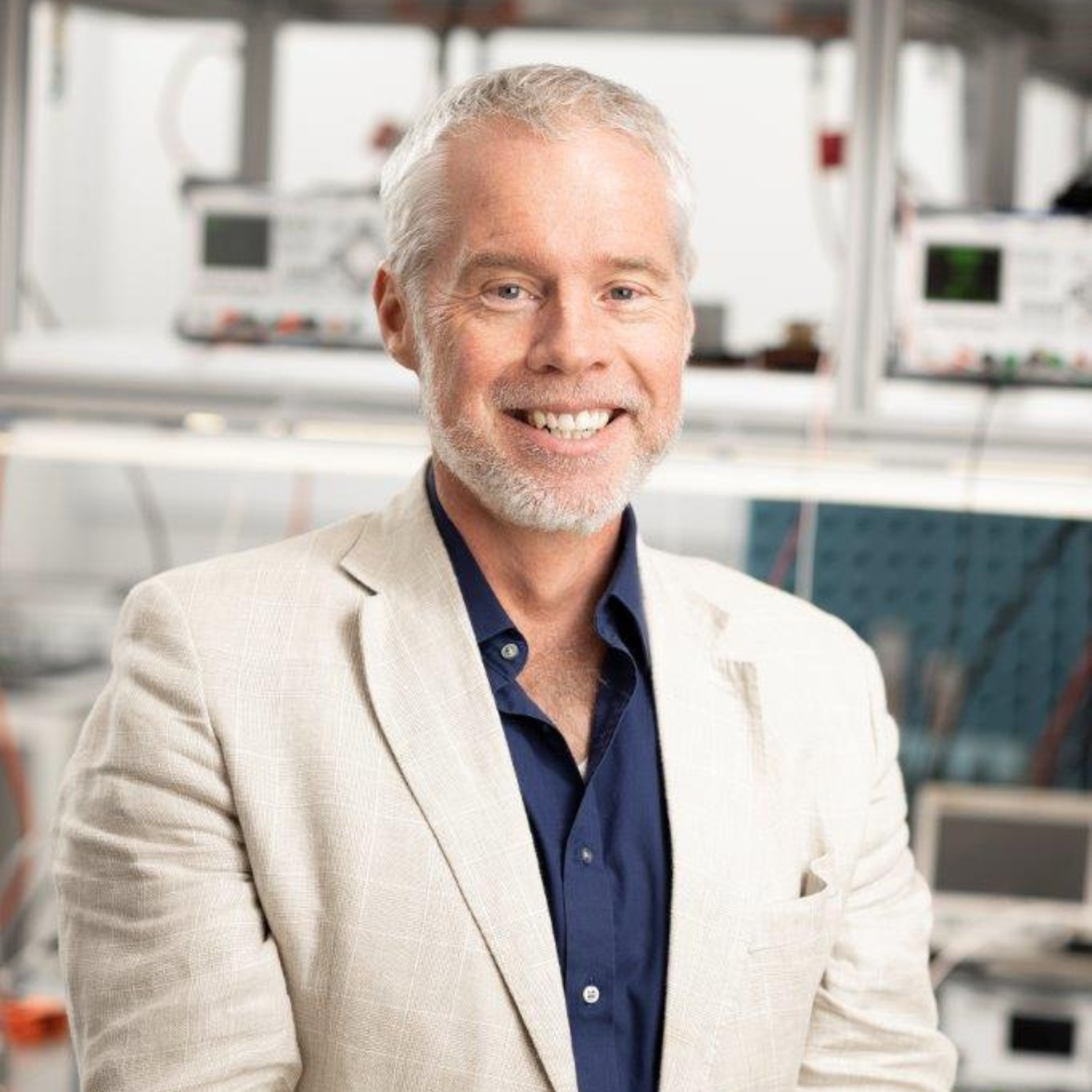
Professor Ben Eggleton. Credit: Supplied
"The early vision was simple but ambitious: align the 'art of the possible' sitting within NSW universities with the challenges facing society," Professor Eggleton said.
He said smart sensing extended well beyond sensors themselves, encompassing connectivity, communications, edge computing, artificial intelligence and data analytics to generate actionable insights.
From the outset, the NSSN prioritised research translation and partnership.
"The introduction of the Grand Challenge Fund was a deliberate strategic step that created focus, scale and industry collaboration around priority areas where NSW capability could genuinely lead."
That approach continues to underpin the NSSN today as it converts research excellence into economic, environmental and societal benefit.
Building the next decade of smart sensing
NSW Chief Scientist & Engineer Professor Hugh Durrant-Whyte said the NSSN had demonstrated the value of connecting world-class research with government and industry to solve real-world challenges.

Professor Hugh Durrant-Whyte. Credit: Supplied
"My predecessor, Professor Mary O'Kane, recognised that world-class sensing science, connected across our universities and aligned with the needs of government and industry, could deliver practical solutions to some of our state's toughest challenges," Professor Durrant-Whyte said.
He said the NSSN's collaborative approach had helped translate smart sensing research into practical, real-world outcomes.
"What ties these efforts together is not just highly innovative technology, but a unique way of working. The NSSN brings together the right people – researchers, engineers, companies, local government, utilities and health districts – and then de-risks the path from lab to adoption."
Looking ahead, Professor Durrant-Whyte said trust, scale and integration would be critical to the network's next decade.
"The real power emerges when we connect sensing across systems – water, energy, transport, health and environment. The NSSN is uniquely positioned to bring these disparate datasets together."
Looking to the future
Current Co-Director Professor Julien Epps said the NSSN plays a vital role in translating world-class university research into products, services and outcomes that benefit society.

Professor Julien Epps. Credit: Supplied
"There is a well-documented 'valley of death' between laboratory-style research and commercial products and services," Professor Epps said.
"The NSSN helps to bridge that gap through connections, funding, mentorship and stewardship."
Professor Epps said the NSSN also plays an important role as a trusted, neutral organisation that brings together universities, industry and government to tackle complex challenges.
"Because NSSN occupies such a neutral and non-competitive territory between universities, government and industry, it is uniquely positioned to convene key players, tackle large problems using co-design methods, and shape possible solutions towards collaborative projects with the right mix of partners and funding for success," he said.
He said the NSSN has become "an exemplar and a waypoint for Australia" as the nation considers the future of research translation and innovation.