
Why environmental sensing must become essential public infrastructure
Affordable, connected environmental sensors are transforming how we understand the world around us. In this Thought Piece, NSSN Natural Hazards and Smart Cities Theme Lead Peter Runcie writes that environmental sensing should become essential public infrastructure, enabling governments, emergency services and communities to make better decisions through shared, local environmental information.
Environmental sensors are becoming cheaper, smarter and better connected - just in time to help Australia tackle some of its biggest challenges.

Peter Runcie. Credit: Supplied
Climate change, urbanisation, changing land use and population growth are placing increasing pressure on our natural and built environments.
Bushfires, floods, heatwaves, pollution and declining water quality all affect the health, safety and wellbeing of our communities.
That is why connected environmental sensing is becoming essential public infrastructure for climate resilience, public health and disaster preparedness.
Like roads, weather stations and telecommunications, it will provide the local information governments, emergency services and communities need to make better decisions and build more resilient communities.
To make those decisions well, we need to understand local conditions, and localised environmental measurements are critical to that understanding.
Until recently, these local measurements have simply not been readily available to those who need them.
Established environmental monitoring networks such as those operated by the Bureau of Meteorology (weather, river levels) and state governments (air and water quality) provide high quality measurements for a relatively small number of locations.
They are not designed however to provide very localised measurements.
For example, they cannot tell us about the air quality at a specific school drop-off and pick-up zone or when a specific local road or bridge is submerged due to flash flooding.
This is changing.
Affordable Internet of Things (IoT) connected environmental sensors are increasingly available and being used to better understand how these issues play out at very local scales.
Their lower cost and commercial availability means that local governments, community organisations and citizens can take the initiative and acquire and deploy monitoring at locations of concern to them.
There are two main challenges to more widespread adoption:
Firstly, although these sensors are affordable, many organisations lack the awareness, capability and confidence to procure, implement, operate and use the data from these sensors.
The second relates to standardisation.
As with any new technology, standards tend to lag innovation.
Manufacturers have by necessity developed their own data formats and data sharing platforms.
However, this has limited interoperability and makes it harder to share environmental measurement data.
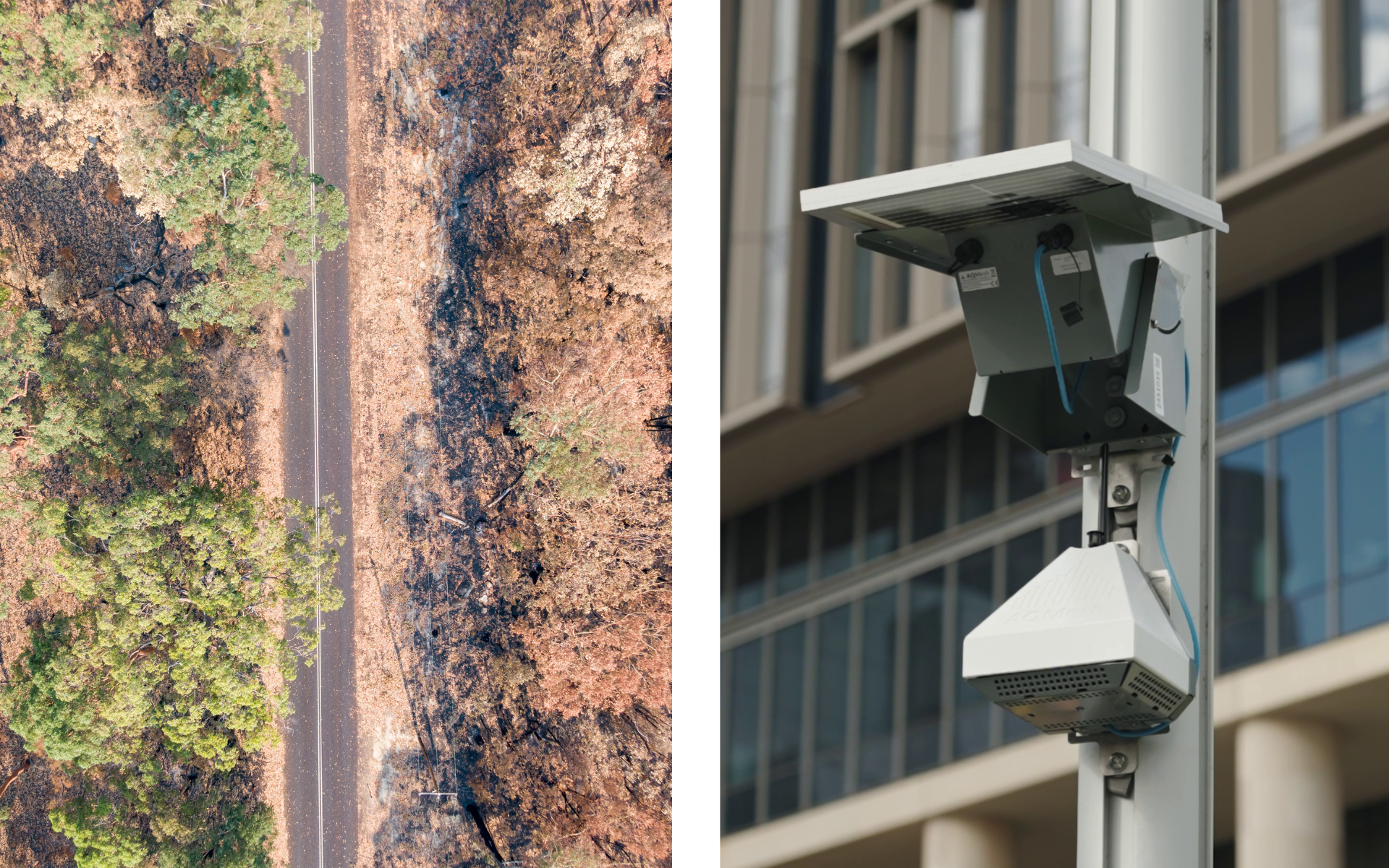
Initiatives such as OPENAIR show how affordable sensing, common standards and shared data can help communities access local air quality monitoring after bushfires. Credit: Supplied and AdobeStock
Several pioneering projects are showing how connected environmental sensing can deliver real-world benefits.
Initiatives including OPENAIR, CLEAN AIR (Victoria) and the NSW Natural Hazard Detection System are showing how affordable sensing, common standards and shared data can help councils improve air quality, support emergency services and make environmental information more accessible.
The multi-award-winning OPENAIR project, initiated and led by NSSN for the NSW Government Department of Climate Change, Energy, the Environment and Water, has shown how affordable air quality sensors can help communities better understand their local environment.
It distilled expertise from UTS, University of Sydney, UNSW, WSU, ANU and several NSW SMEs into a comprehensive set of publicly available best practise resources.
By helping local governments procure, deploy and use low-cost sensing equipment, OPENAIR has made local air quality monitoring more accessible.
For example, parents can check air quality before walking their children to school, while councils can identify pollution hotspots and make more informed planning decisions.
Just as importantly, OPENAIR pioneered a harmonised environmental data feed that combines measurements from different sensor manufacturers into a single interoperable dataset, demonstrating how common standards can unlock the full value of environmental sensing.
The success of OPENAIR has inspired the CLEAN AIR (Victoria) project, led by RMIT, sponsored by the Victorian Government and supported by NSSN.
CLEAN AIR is helping councils in Melbourne’s inner west use low-cost air quality and noise sensors to better understand traffic pollution and develop evidence-based responses.
The NSW Natural Hazard Detection System (NHDS), led by the NSW Office of the Chief Scientist and Engineer on behalf of the NSW Reconstruction Authority and supported by NSSN, is applying the same principles to bushfires and floods.
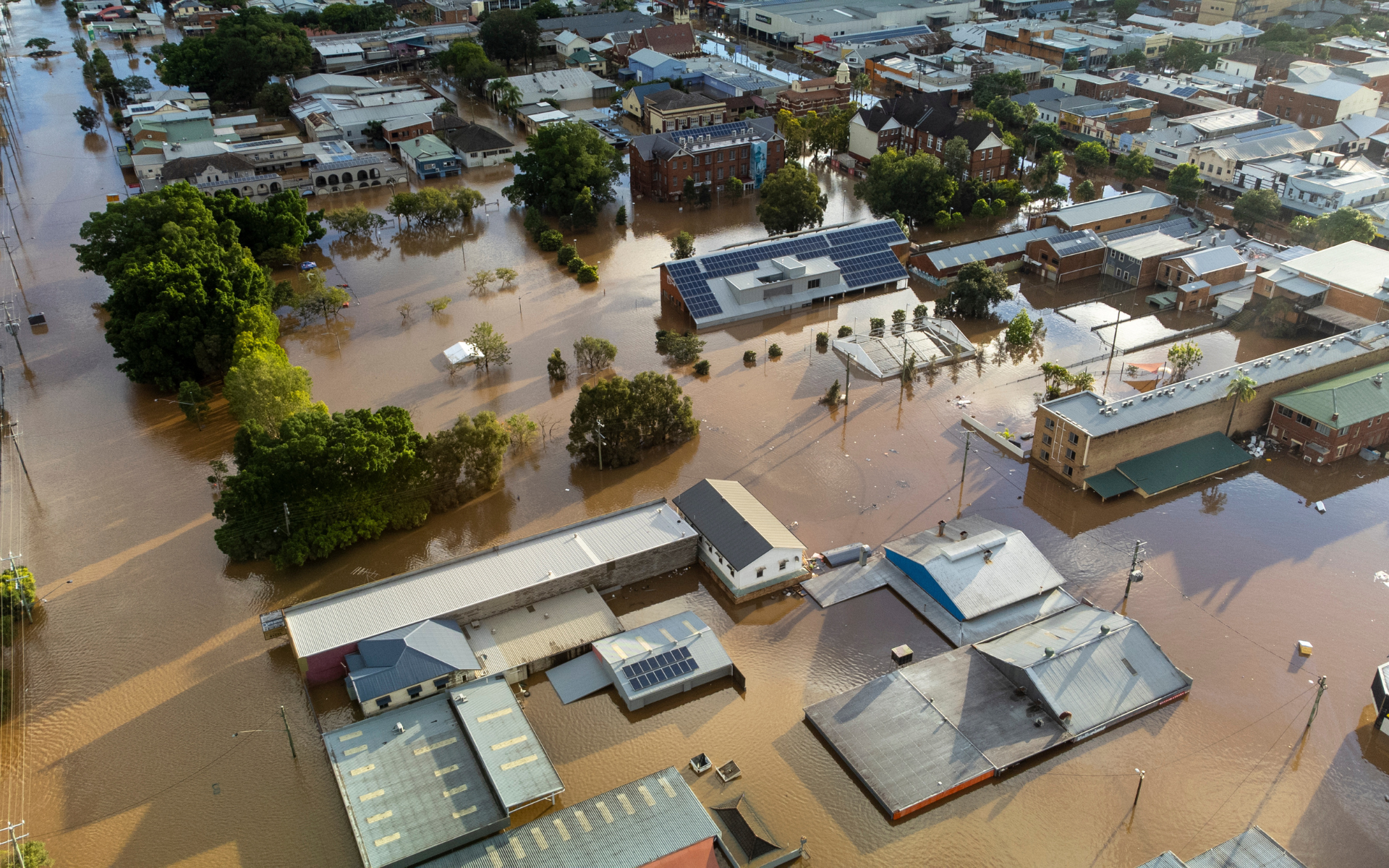
Real-time environmental sensing can give emergency services a shared picture of flood conditions, helping them make faster, better-informed decisions during emergencies. Credit: AdobeStock
The project is bringing together data from a range of environmental sensing technologies into a common platform, giving emergency services and other agencies access to consistent, real-time information during emergencies.
Disaster management is a team effort.
By adopting common standards and shared data, NHDS will help ensure everyone responding to a flood or bushfire is working from the same information, enabling faster, better-informed decisions when they matter most.
These projects are just the beginning of a significant opportunity to harness localised environmental measurements for the benefit of all Australians.
The standardisation work pioneered by these pilots continues in parallel to these initiatives. Expanding the range of measurements, refining the API and formalising an open governance model are all underway.
Like any critical infrastructure, environmental sensing depends on common standards. They enable interoperability, support widespread adoption and create opportunities for new applications that may not yet have been imagined.
We are now at the start of a new chapter in how we use local environmental measurements to help make our communities healthy and resilient.
Australia has the expertise, technology and partnerships to become a world leader in connected environmental sensing.
The next step is ensuring every sensor contributes to a shared national picture, giving governments, emergency services and communities the information they need to build a safer, healthier and more resilient Australia.
If you would like to know more about any of these initiatives or the environmental measurements standardisation work contact Peter Runcie, NSSN’s Natural Hazards and Smart Cities theme lead.